

A Practical Autumn Window and Door Checklist for Suffolk and Norfolk Homes
Ten useful checks you can carry out before colder, wetter and windier weather arrives.
By ABS Home Improvements, 30 September 2026, 7 min read

Autumn weather across Suffolk and Norfolk can change quickly. A calm September afternoon can soon give way to driving rain, colder nights and strong winds, especially in exposed rural and coastal locations. This makes early autumn a useful time to walk around your home and check how its windows, doors and roofline are coping.
You do not need specialist equipment. Most of the checks below take only a few minutes and can be completed safely from inside or at ground level. They will help you separate small maintenance jobs from problems that deserve professional attention.
Your quick autumn checklist
- Feel around closed windows and doors for draughts
- Check rubber seals for gaps, flattening or damage
- Open and close every moving window and external door
- Look for moisture between the panes of double glazing
- Clear accessible window drainage channels
- Check locks, handles and hinges without forcing them
- Inspect guttering, fascias and soffits safely from the ground
1. Find draughts before the heating is working hard
Choose a cool or breezy day and close the window or door normally. Slowly move the back of your hand around the opening parts, the frame and the meeting point between two opening sections. A noticeable stream of cold air may indicate a worn seal, poor adjustment or movement in an older frame.
A curtain moving does not prove the window itself is leaking because air can also enter through wall vents, floorboards and unused chimneys. Check the same spot more than once before drawing a conclusion. Avoid using a naked flame to test for draughts.

2. Inspect the seals without pulling them out
Open each window and look at the black or grey rubber seal around the frame and opening sash. It should sit evenly with no obvious gaps, splits or sections hanging loose. Wipe away dirt with a soft cloth and warm soapy water, then dry it.
Do not glue loose seals or pack gaps with general-purpose sealant. The wrong repair can interfere with drainage or stop the window closing correctly. If several seals are damaged, ask an installer whether they can be replaced or whether the frame has started to distort.
3. Open, close and lock every window and door
Windows that are rarely opened are easily forgotten. Check each handle turns smoothly and the opening section closes evenly against the frame. External doors should latch without being slammed and the key should turn without excessive pressure.
Do not force a stiff handle. The problem may be a simple adjustment, but continuing to force it can damage the locking mechanism. If a door catches only during very wet weather, note where it rubs and whether the problem disappears when conditions become drier. This information is useful when you ask for advice.
4. Work out where condensation is forming
Condensation tells you different things depending on its location:
- On the room side of the glass: this is usually moisture in the indoor air meeting a colder surface. Use extractor fans, keep trickle vents open where fitted and ventilate after cooking, showering or drying clothes.
- On the outside of the glass: this can appear on efficient glazing during cool mornings. It often means the outer pane is staying cold because less heat is escaping from the room.
- Between the panes: misting or droplets inside the sealed unit usually point to a failed double-glazed unit. It cannot be wiped away from either side and should be professionally assessed.
Persistent moisture around reveals, plaster or timber needs attention because the source may be ventilation, failed seals, damaged pointing or water entering from elsewhere.
5. Check drainage slots and window sills
Many uPVC windows have small drainage openings that allow rainwater to escape. Look along the lower part of the frame and remove loose dirt with a soft brush. Do not push tools deep into the frame or seal the openings.
Outside, check that sills are not cracked and water is not sitting against the wall. Dark streaks below one corner can indicate that water is not draining as intended.
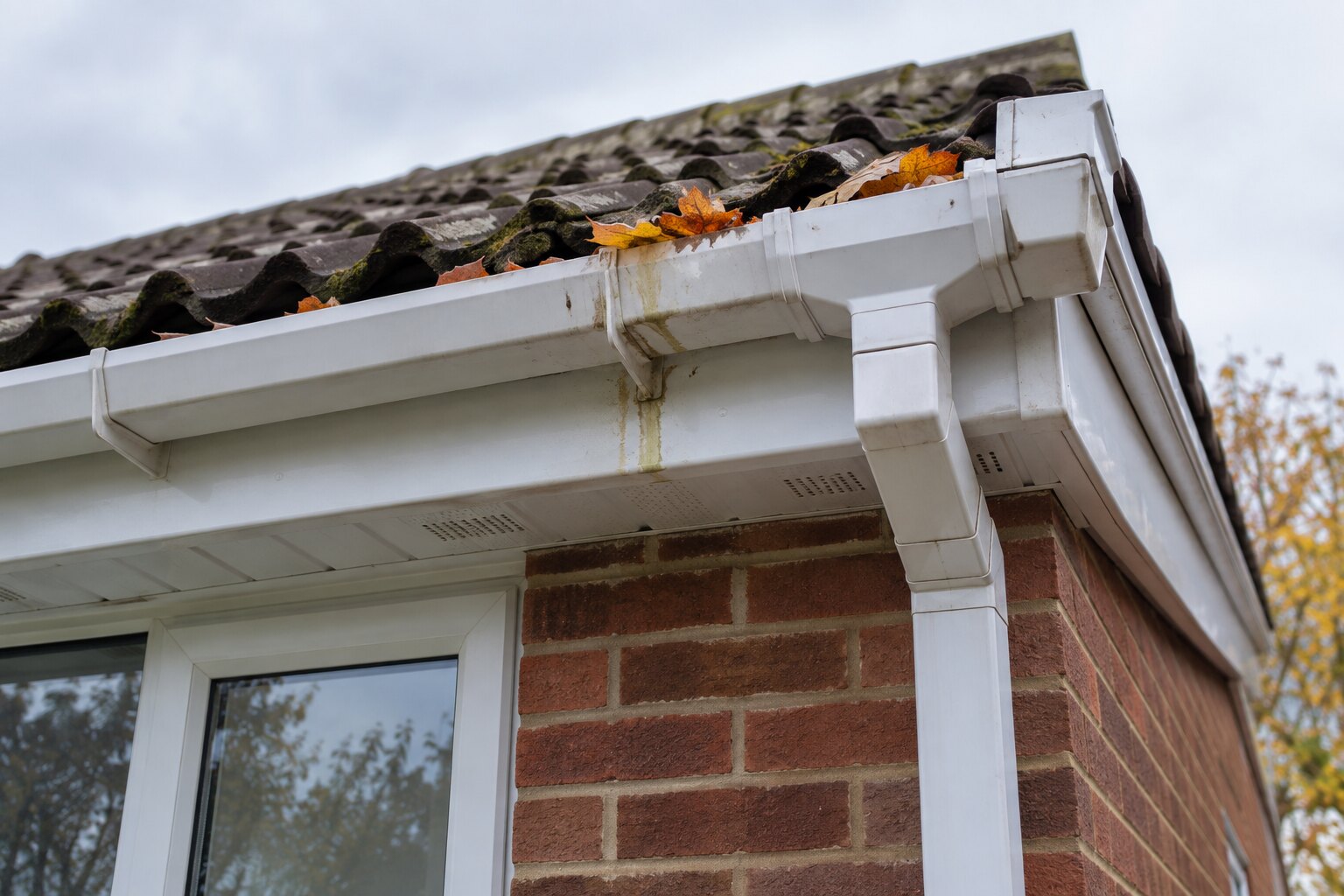
6. Look up at the roofline, but stay on the ground
After rain, walk around the outside and look for gutter joints that drip, water running down walls, overflowing sections and downpipes that appear blocked. Also look for peeling timber, sagging gutters and gaps in fascias or soffits.
Binoculars or a phone camera zoom can help you inspect safely. Do not climb onto a wet ladder or attempt work near the roof edge. If water is overflowing or roofline boards are deteriorating, arrange a closer professional inspection.
7. Decide whether you need maintenance, repair or replacement
One stiff handle or a localised seal problem does not automatically mean you need new windows. Adjustment or replacement hardware may solve an isolated fault. However, replacement may be worth discussing if you find several of the following:
- Repeated draughts across a number of windows
- Condensation trapped between several panes
- Frames that are warped, cracked or difficult to secure
- Doors that no longer close squarely
- Widespread deterioration rather than one small fault
- Rooms that remain noticeably cold beside older glazing
A reputable installer should explain what can be repaired and what would genuinely benefit from replacement. ABS Home Improvements supplies and fits energy-efficient uPVC windows, composite doors and low-maintenance uPVC roofline across Suffolk and Norfolk.
Questions homeowners often ask
Is indoor condensation proof that my window has failed?
No. Moisture on the room side is commonly linked to indoor humidity and ventilation. Condensation between the panes is the more likely sign of a failed sealed unit.
Should I seal every visible gap around a window?
No. Some openings are designed for ventilation or drainage. If you are unsure what a gap is for, ask before filling it.
Can ABS check more than one part of the property?
Yes. ABS can discuss windows, external doors, conservatory roofs, fascias, soffits, guttering and downpipes as part of your wider home improvement plans.
Found something you are unsure about?
If your autumn check reveals draughty windows, misted glazing, a poorly fitting door or tired roofline, ABS Home Improvements can provide straightforward advice and a free quotation across Suffolk and Norfolk.
Get a Free Quote Book a Home Visit